J52 Engine Design Study
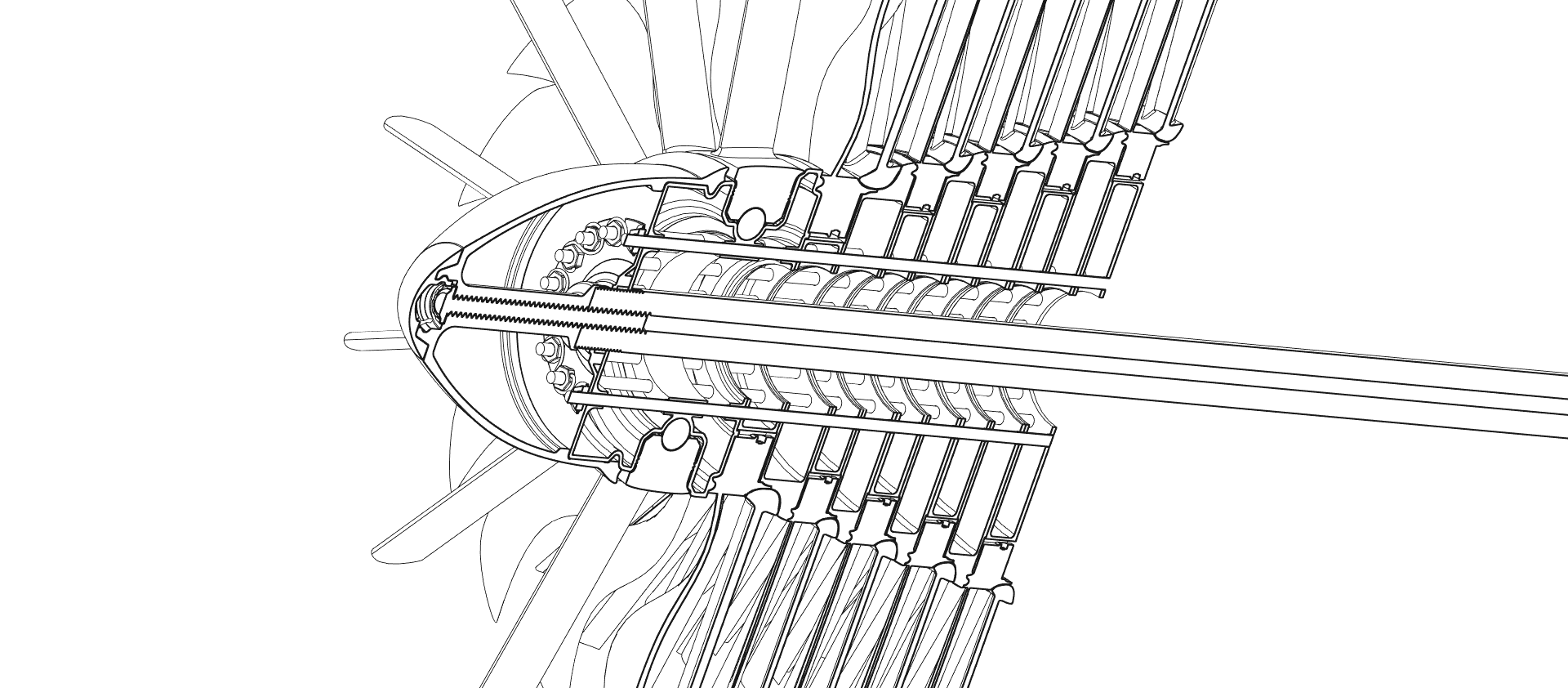
Cross-Sectional view of the engine, showcasing the internal components, connections, threads, and other realistic details.
Due to my interest in Jet Engines, and the fact that I had created some pretty hacky ones in the past, I decided to try to create a jet engine that is as accurate as possible to real life. As I was working on an A6 Intruder plane project at the time, I chose the J52 engine, which is the model of engine mounted in that aircraft. As I could only find one reference on the J52’s engine design, I had to take a few liberties and decided to create the modern alternative for components for which I didn’t have references. So far, I have only completed the first low-pressure compressor section of the jet engine, including vibration resistance and the connection points for each component.
To start out with, I began work on just one compressor blade, including a fir-tree connection joint, which is one of those more modern designs that I spoke about earlier. This fir-tree design ensures that the components are easily swappable but also completely solid in the connection for each blade. The design ensures maximum gripping and the lowest leakage of air compared to older designs, which would actually be present in the J52’s engine. I duplicated these compressor blades radially multiple times, matching them to the compressor characteristics of the engine, including the number of stages and compression slope profile of the engine (essentially just how much the compressor constricts over the entire compressor stage. Once I had the joints and blades in place, I hollowed out the middle, making each plate able to be taken out, but torqued together firmly during operation, as was typical in old jet engines. After this, I added each stator, adding a slight tilt to each of them, which would reorient air back to a straight vector in an actual jet engine, so that air passes cleanly through the next stage instead of just rotating and being deflected off the trailing end of the blade. After this, I worked on the central rings connecting each stator, which was pretty easy. For the last bit of the actual low-pressure compressor section, I joined each component together at the front, with a connection point directly connected to the driveshaft running to the low-pressure turbine at the back of the engine. For the connections, I made a multi-layered system; first, the driveshaft was joined with a custom washer, then the nuts for each bolt that runs through the compressor stages were torqued down on top of that, so that it would be held in completely, with no possibility of the driveshaft detaching. Once that was completed, I made sure each nut had lockwire running through it, so they couldn’t be untwisted from the high vibration of the engine. All of this is capped off with a nose cone, which tightens itself right down into a thread in the hollow driveshaft. The bolt holding the first nose cone section on is also held firmly in place by the geometry surrounding it; a washer secured to the nosecone itself, making sure that it won’t be able to unscrew itself. The last piece is the second nose cone, which hides the rough geometry on the front by capping it off. This nose cone piece would be permanent, as it would be pressed in with extreme force until it snaps into a channel. If this has to be replaced or the assembly had to be modified to swap out components or blades, only this piece would have to be destroyed. This is because connection points would ruin its aerodynamics, and the piece would likely not be viable to remove, even with connection points, due to the immense snap-ring pressure. The front stator and stabilization point for the engine are held on with an extremely high-speed bearing, and the stator blades have channels for bearing oil to be pumped in and out, to ensure it is able to continue spinning at these high speeds.
This project, although only partway complete, taught me design with high-frequency vibration, as well as design with complex mechanisms in mind. Each component took extreme care to design is designed to work seamlessly with other components, such as the high-pressure compressor, combustor, and high-pressure turbine.
