Generative Drone
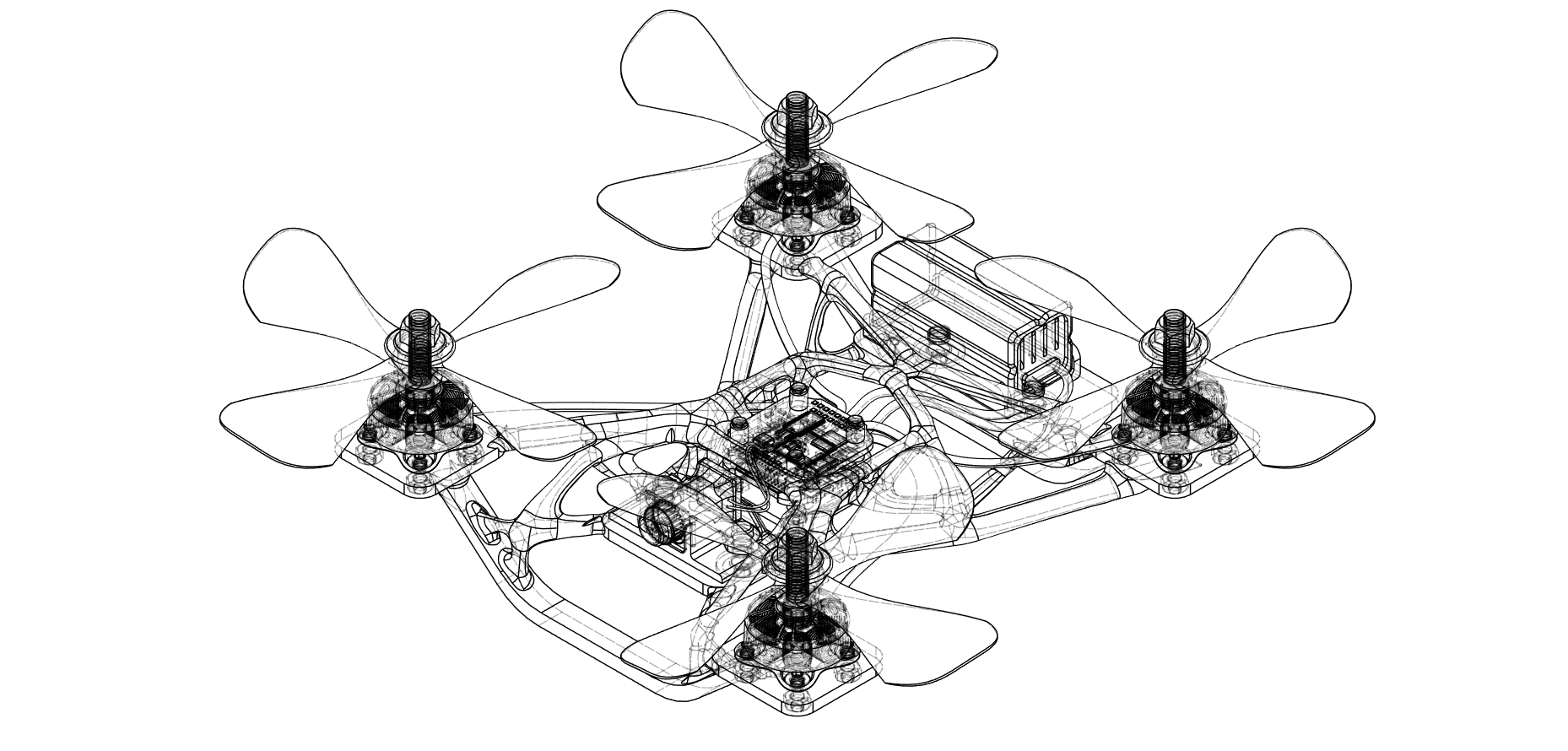
The final, streamlined drone study, with components populated on the drone itself and rough wires drawn between components.
Partway through my Grade 12 semester, after my first design on Fusion360, I really wanted to test out the generative design feature, as the license of Fusion that we used allowed for infinite generative designs because of an unlimited amount of credits. As I had been experimenting with drone boards, FPV was the first thing that popped up for me, even if I would never actually print and use one of these drones for myself. To start, I defined target objectives- which, looking back, were extremely strict. The drone frame itself is tiny, with measurements of about 15 centimetres per side. I also knew I wanted the drone to be fairly robust and collision-resistant, and truly wanted it to be the most solid thing on any drone that it was used with. With these constraints, I went ahead and defined the starting geometry and kept out zones- ensuring screws were easily accessible, that screw holes were permanent and unobstructed, and the frame would be able to hold all components in realistic areas, without obstructions in mounting. Later on, after a few design studies, I also added a permanent air channel through the bottom to decrease unintended lift forces. After that, I also added the landing struts on the bottom, so the main drone frame was slightly suspended, and would have a firm base to launch or land.
Starting the generative design study was interesting, as there were multiple different geometry types to explore. Over a bit of trial and error, I found casting and machining to be the most interesting, but also the most impractical- whereas additive manufacturing and unrestricted gave the most consistent ‘generative’ results, which are seen below. I slowly iterated through different forces, force directions, and other variables, until I arrived at a frame that I was happy with- the one above. This one combined the perfect mix of robustness and aerodynamic flow that I was looking for, and kept most supporting parts central to the main struts and center of mass, which roughly ensured aerodynamic viability. I did not have the chance to run aerodynamic tests on any of the frames I had designed, but I hope to eventually create an FPV drone with a generative frame sometime in the next few years, as it seems interesting to me.
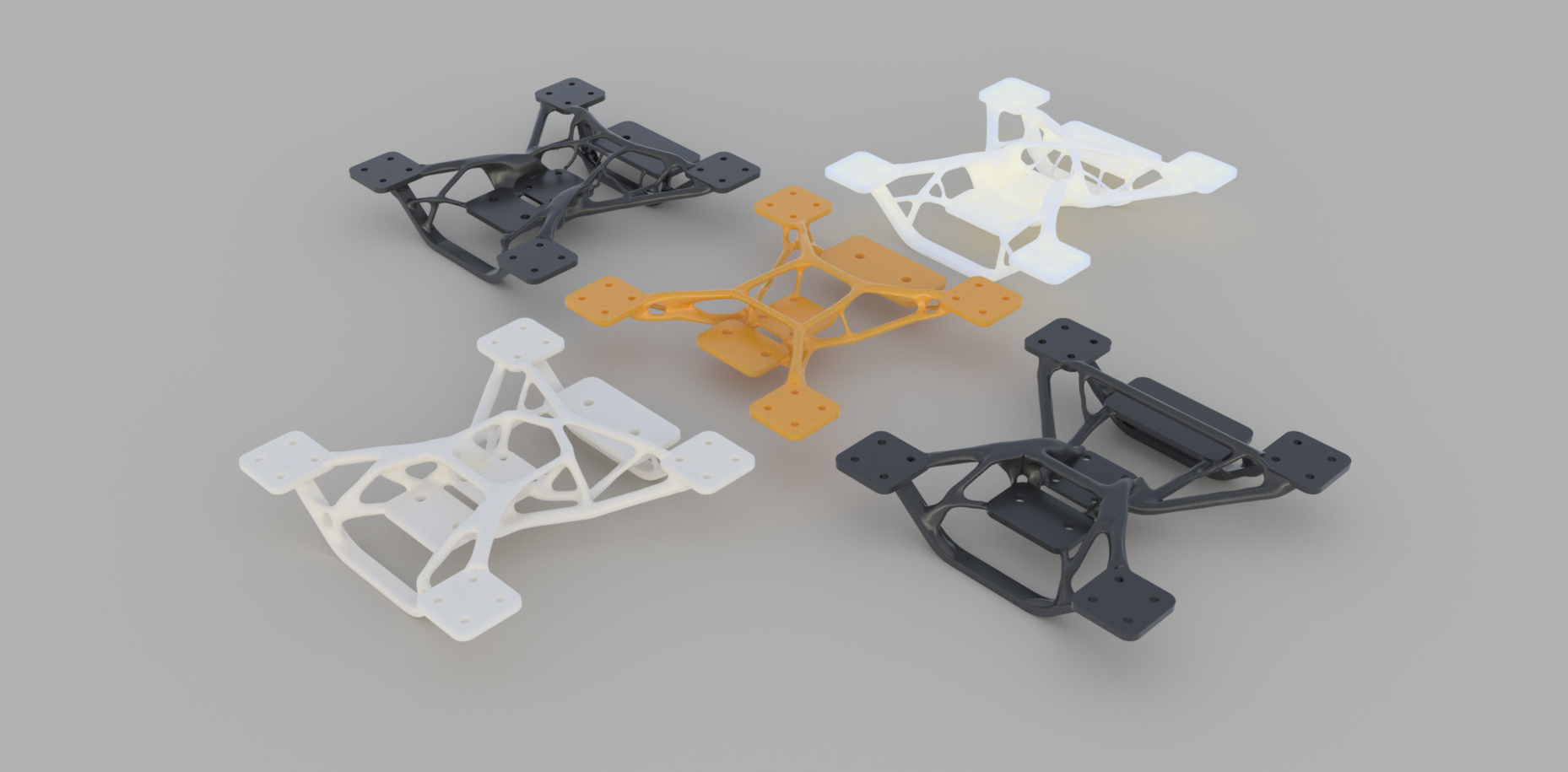
A showcase of multiple drone variants that I had iterated through, with various modifications of the generative study’s design constraints. This showcase is not extensive.
In creating the design study for the drone, I had to modify many different variables in order to get the desired drone that could handle the forces I fed into it. Below and above are some of the drone variants I went through by modifying materials, starting geometry, design constraints, generative design objectives, manufacturing modes, and the forces exerted on the drone. My goal was to create as robust a drone frame as possible, such that the frame itself would not be the point of failure in any realistic crash or wear, and that other components would fail first before the frame did.
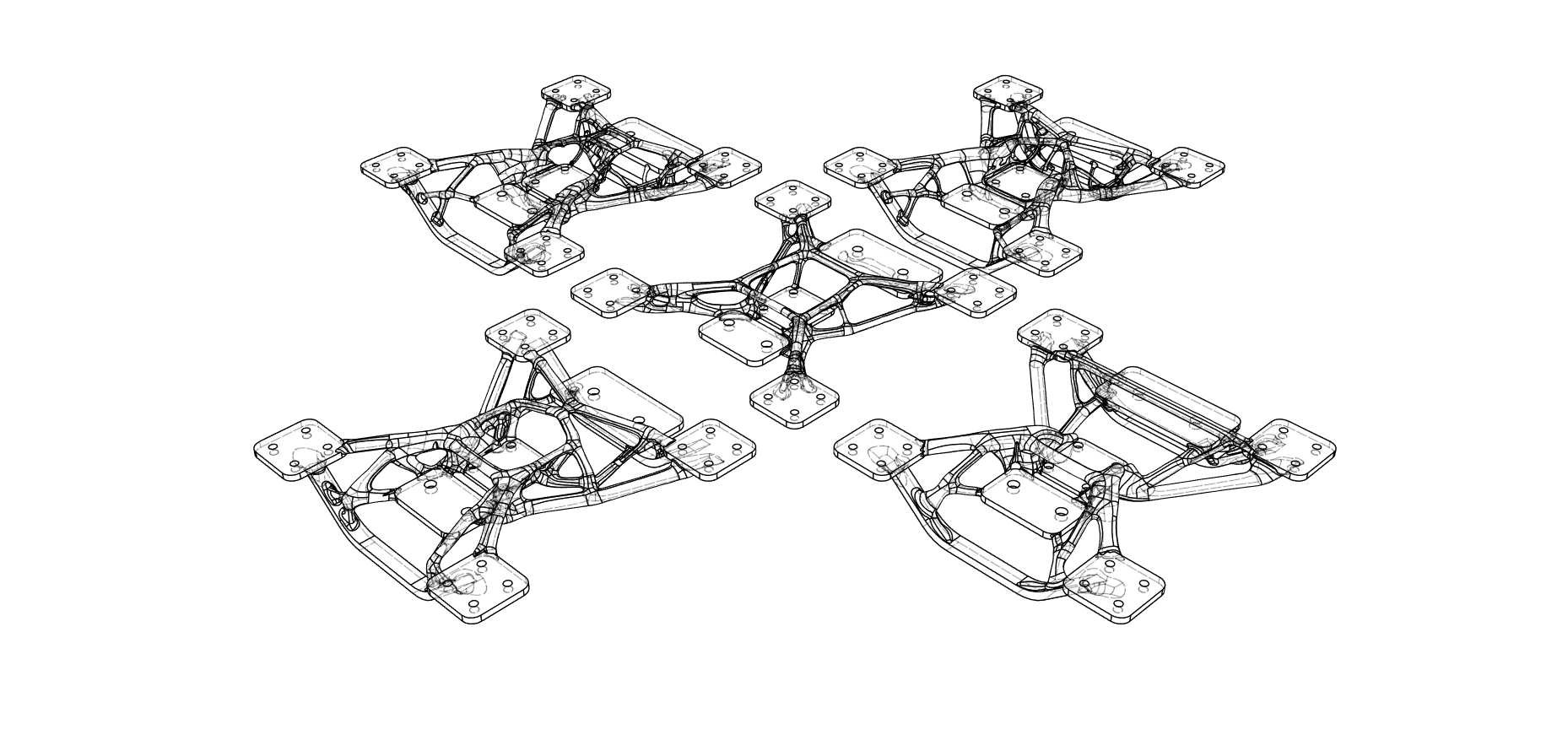
The same drone variants as above, just without the material colors, and with wireframe views to better notice their individual differences.
