ECAD: Small Flight Controller
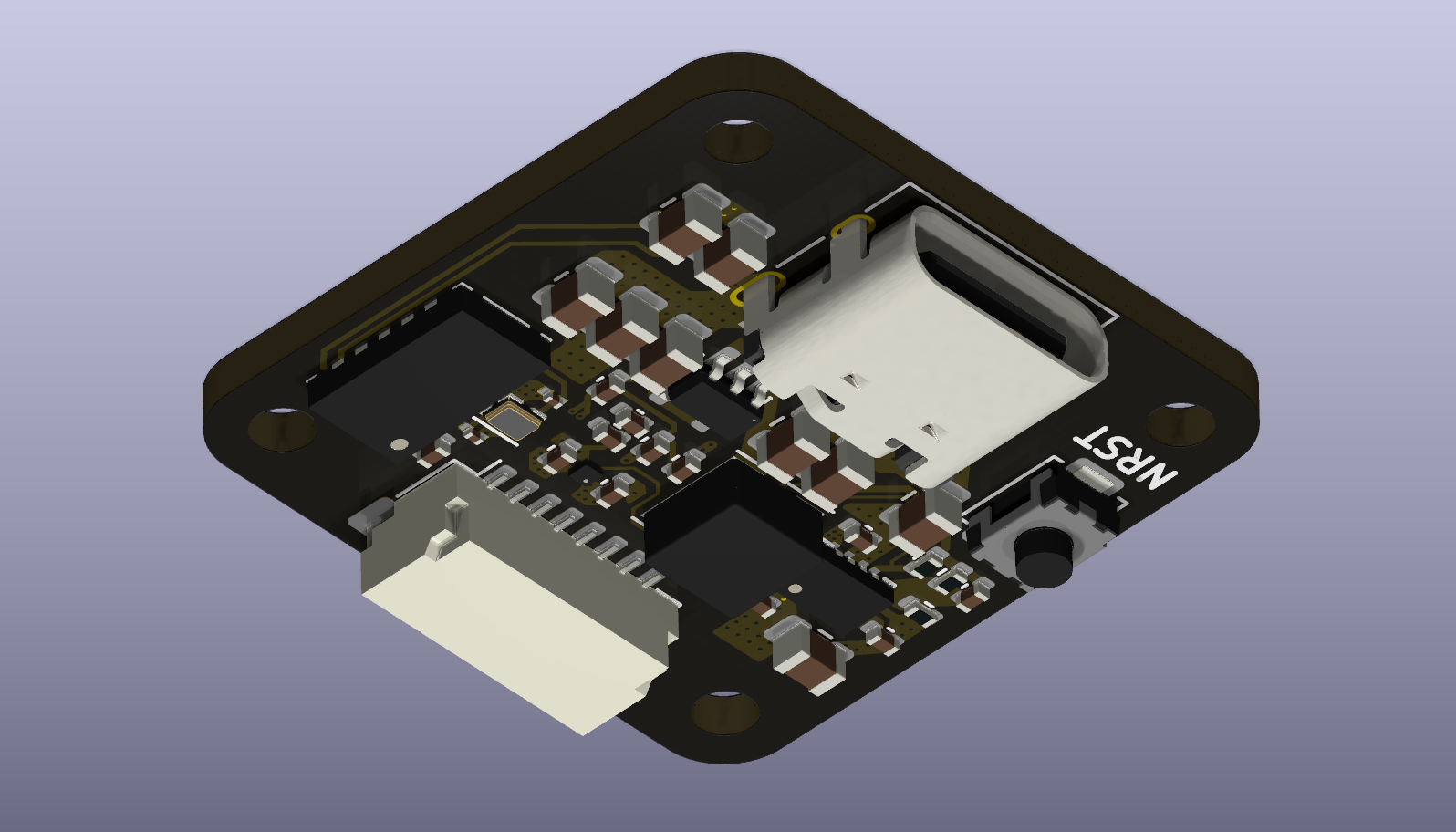
Bottom view of the Flight Controller, showcasing the power management systems, ESC connector, programming USB, video processor, and decoupling for top components.
Near the end of my first Semester of Grade 12, around the time I was finishing my Computer Engineering class, I was creating pretty bad flight controllers out of sheer interest. This was the final flight controller I made, and it was a culmination of skills I had accumulated over the several I had previously designed. This flight controller measures just 25mm by 25mm, about the size of a postage stamp. What it contains, however, is extremely powerful- especially for its size. It contains a powerful microcontroller, the F405, which runs at 168MHz. Alongside it is an extremely accurate sensor suite- containing a stable and accurate IMU, Magnetometer, and Barometer. The clock generating a frequency for the F405 is also extremely accurate, with built-in stabilization and thermal management to ensure precision, even with temperature variations. The last major computational IC is a 2GB memory module, which allows for a long black box to be stored during the flight, for pilots to debug with the flight controller on any issues they encountered during the flight. An IC was also added to manage the video stream, overlaying text onto video data, allowing the flight controller to show the pilot the battery, heading, speed, and any other information they may need on the interface during flight.
Although the flight controller almost certainly has some issues, I am confident that there are only minor ones, and I am extremely happy with how this flight controller came out in the end. It is relatively compact in height and extremely compact in width. The power management systems are very stable, and the entire circuit is designed to be noise-resistant, with expandability being a main design focus alongside that.
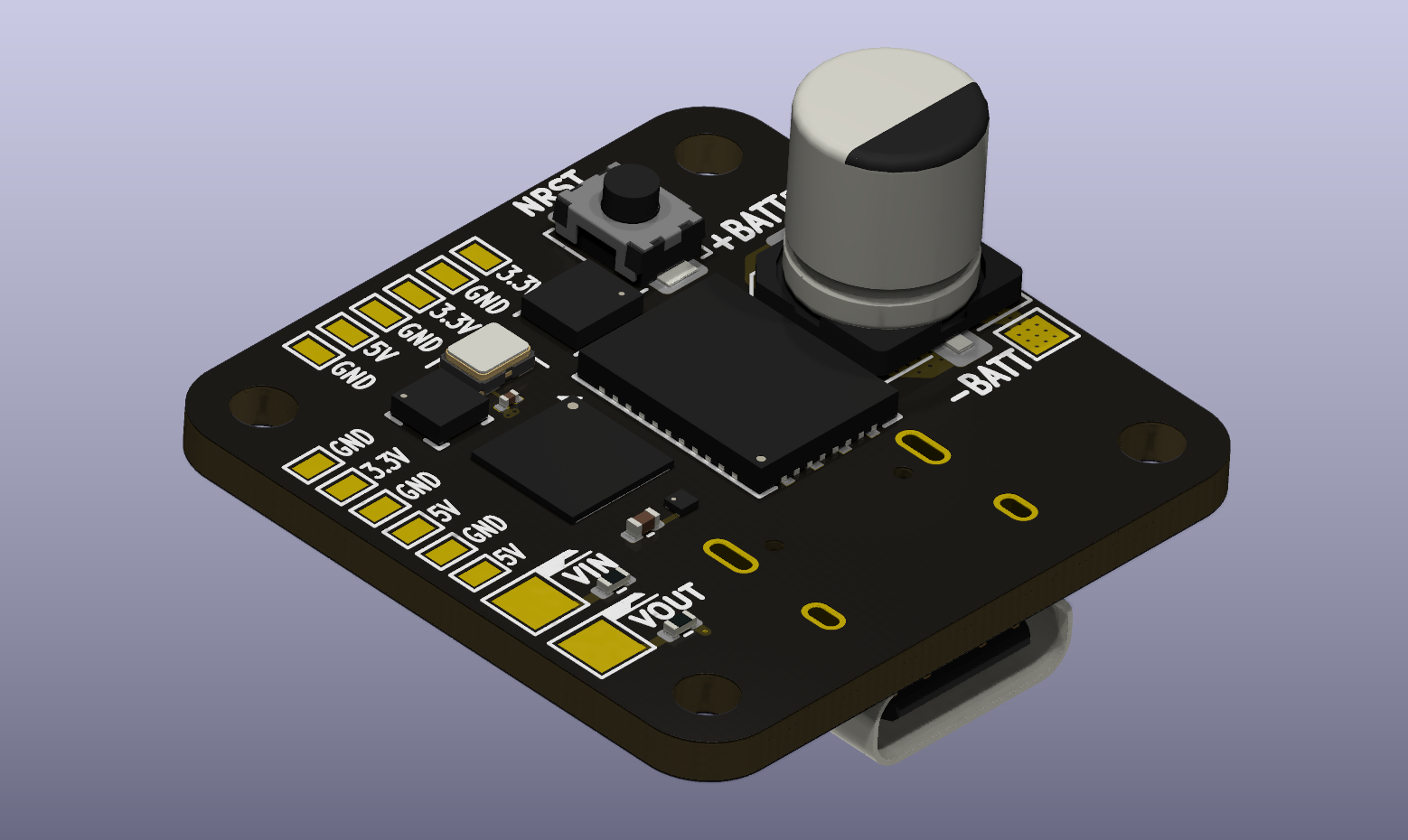
Top view of the Flight Controller, showcasing solder pads (not all pictured there) and all the ICs, as well as a large electrolytic capacitor.
