Robotic Arm
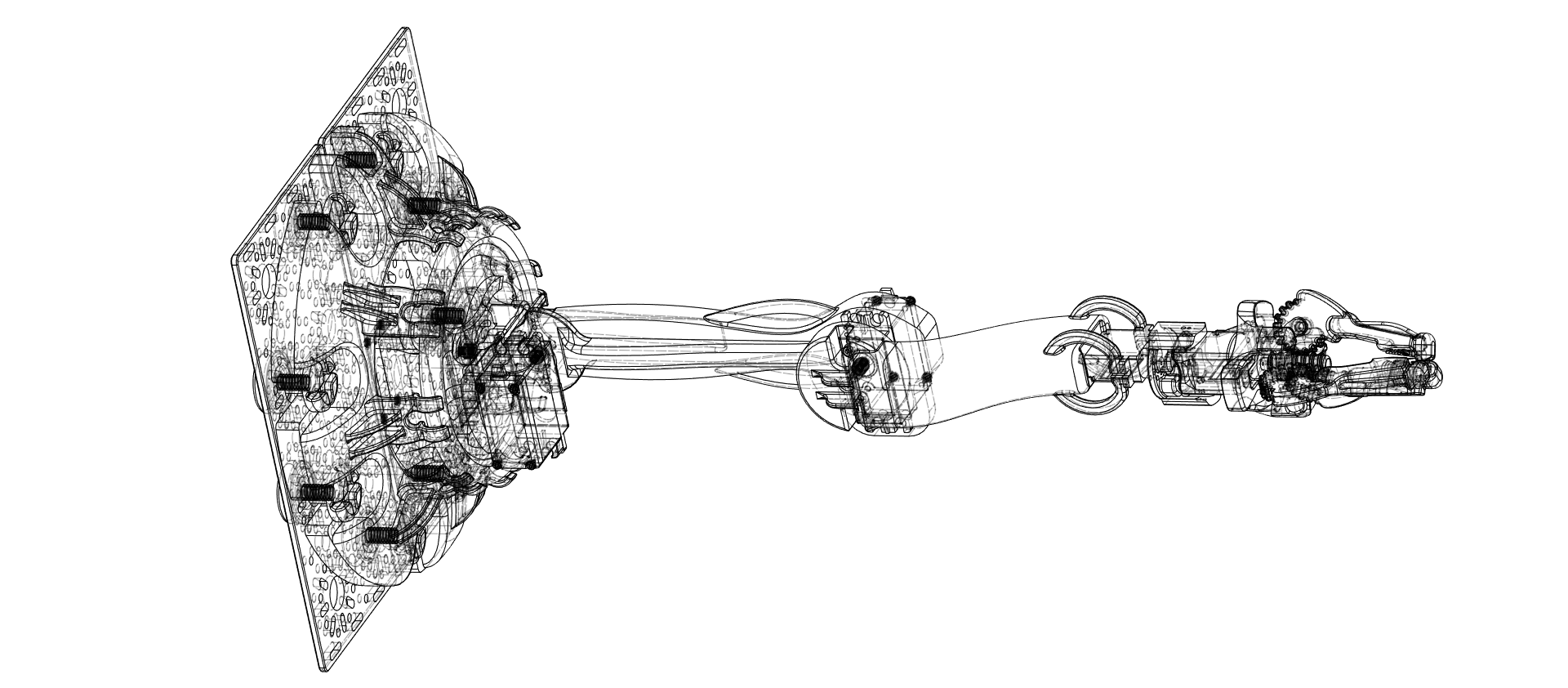
Full-frame view of the robotic arm, with wireframe mode on. Base and gripper complexity is highlighted.
This is a robotic arm I designed within a week for a robotics competition. It was designed to have a stable base, long reach, and still be light and thin. While designing this arm, I began with the base- ensuring I had enough support to hold the mechanism and keep it rotating in line, for both the Vertical and Horizonal axis of rotation originating at the base. From there, it was a simple architecture, just thin but strong structural joints connecting, until the hand. Although I designed and printed the hand, the engineering and tolerances I designated for it were way off from what it had to be, and the hand ended up being unusable. To compensate for this, I ended up screwing a premade, two-finger hand into the rest of the assembly, which worked fine for the competition. The design for the planned hand was complex and should have been done with more planning in mind. I had designed it to be a three-finger, worm-gear-driven mechanism, which worked fine after printing by itself. The problem, though, was that the arm couldn’t hold anything effectively and would just click back and forth on the edge of whatever it was supposed to be gripping. The reason for this was tolerances on the components that held each finger, resulting in the gearing for each finger being able to move backward and let the worm gear skip. As I didn’t have time to reprint and do a semi-redesign of the mechanisms, I had to compromise with the solution from earlier.
Although there are many things I would change about the arm, I wasn’t too dissatisfied with the results of it, considering I modelled it in such a short time, and didn’t have much opportunity to test components. The arm proved pretty robust throughout the competition, except for some design flaws that could have been easily corrected if I had extra time. It worked using three Studica 75002 multi-mode servos, as well as two MG90S micro servos, for the hand and wrist, which both ended up being removed on the competition design. In the full competition design, it used four multi-mode servos, with one powering the gripper, providing high clamping force.
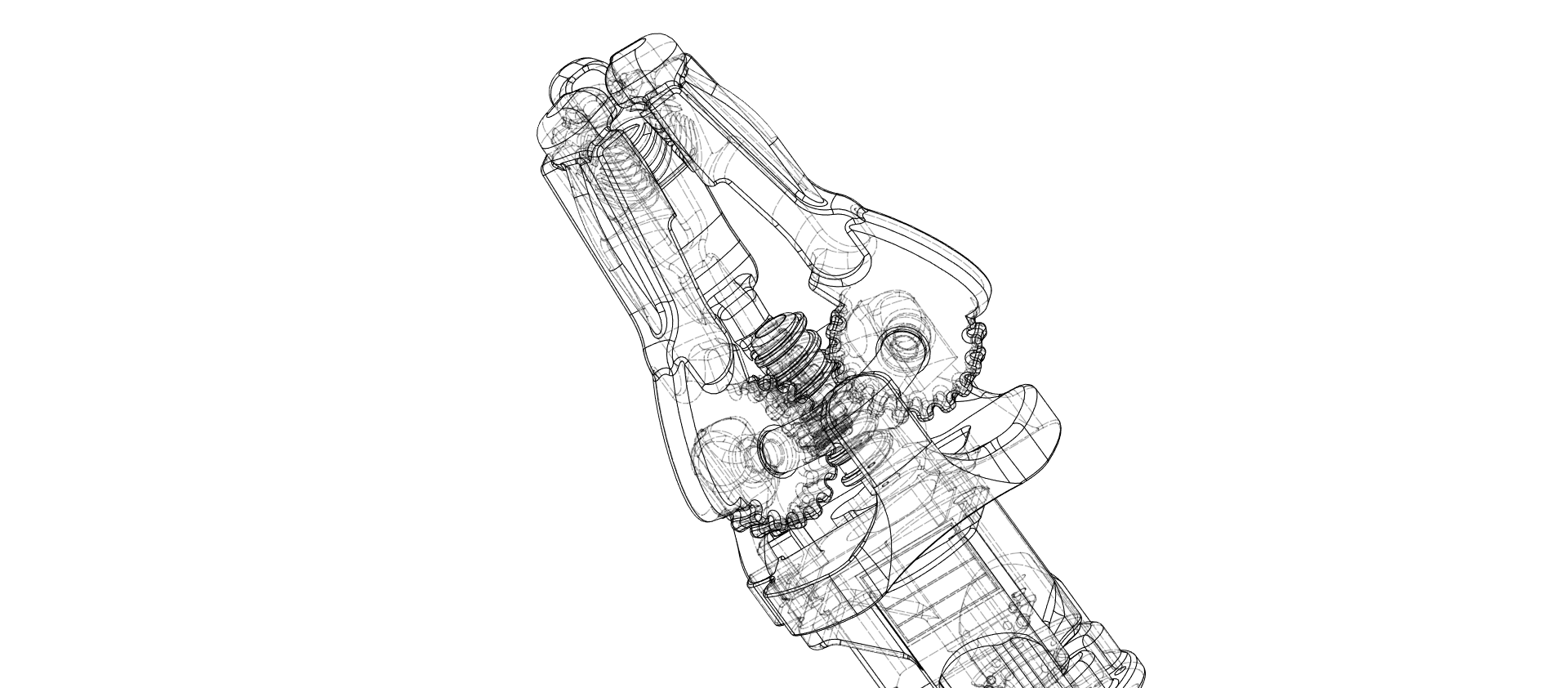
Focus image on the gripper, showing the worm-gear mechanism as well as each finger in more detail.
