F16 Fighting Falcon
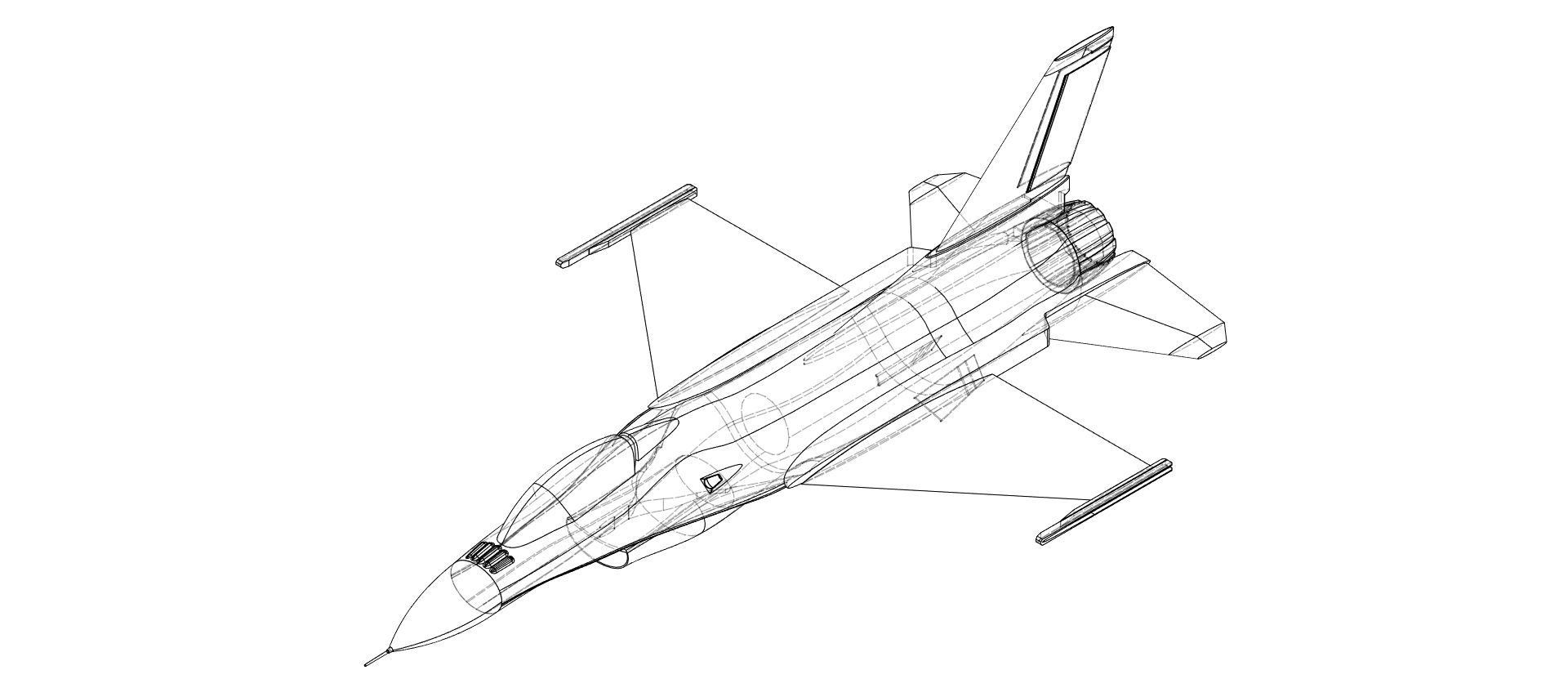
A top, semi-wireframe view of the plane, showcasing multiple separate components of the plane, including a faint inner engine channel and other larger components.
As a final project of my Grade 11 Tech Design semester, I decided to work on a complex plane: the F16. Creating the CAD model for this plane was complex for one very specific reason- the separation between the inlet and the main hull of the plane, and the seamless blend between them. In this model, similar to my other early plane models, I used a lofting technique for joining the profiles of the plane together as a seamless body. This technique isn’t the best as it makes joining bodies difficult and makes it hard to ensure seamless flow between profiles. A major disadvantage of this technique is also that it makes changing the model later on more difficult, as my profiles were typically modified to be seamless exactly as they were, and changing them after the fact has caused rippling in the surface of my designs, which is difficult to correct.
For this CAD model, I began with the main body, with no wings or tail. Once I had that, I made the intake separately and lofted it with profiles of the main body to make the connection as seamless as I could. This didn’t go perfectly, however, and caused pinch points where the bodies connect, which is not accurate to any real-life F16 design. From there, once the connection was made, I added details like any other plane, refining different parts of the body and adding the most apparent details. The last thing I did for this plane was create a body which mimicked the inner intake and engine channel of the F16, extending through the exhaust. I booleaned that with the main body, and that created a channel through the model, mostly out of curiosity about whether I could do it, and if it would work with the geometry.
Although there are many different things I would change if I were to recreate the model now, I was and still am extremely satisfied with the result. The only major gripe I have with the model was that I kept the inner channel in while I 3D printed the plane, which caused supports to be stuck in the middle of the plane, and could not be removed. If I were to reprint it, I would print the plane near-vertically, so the channel would be able to be printed without any support material.
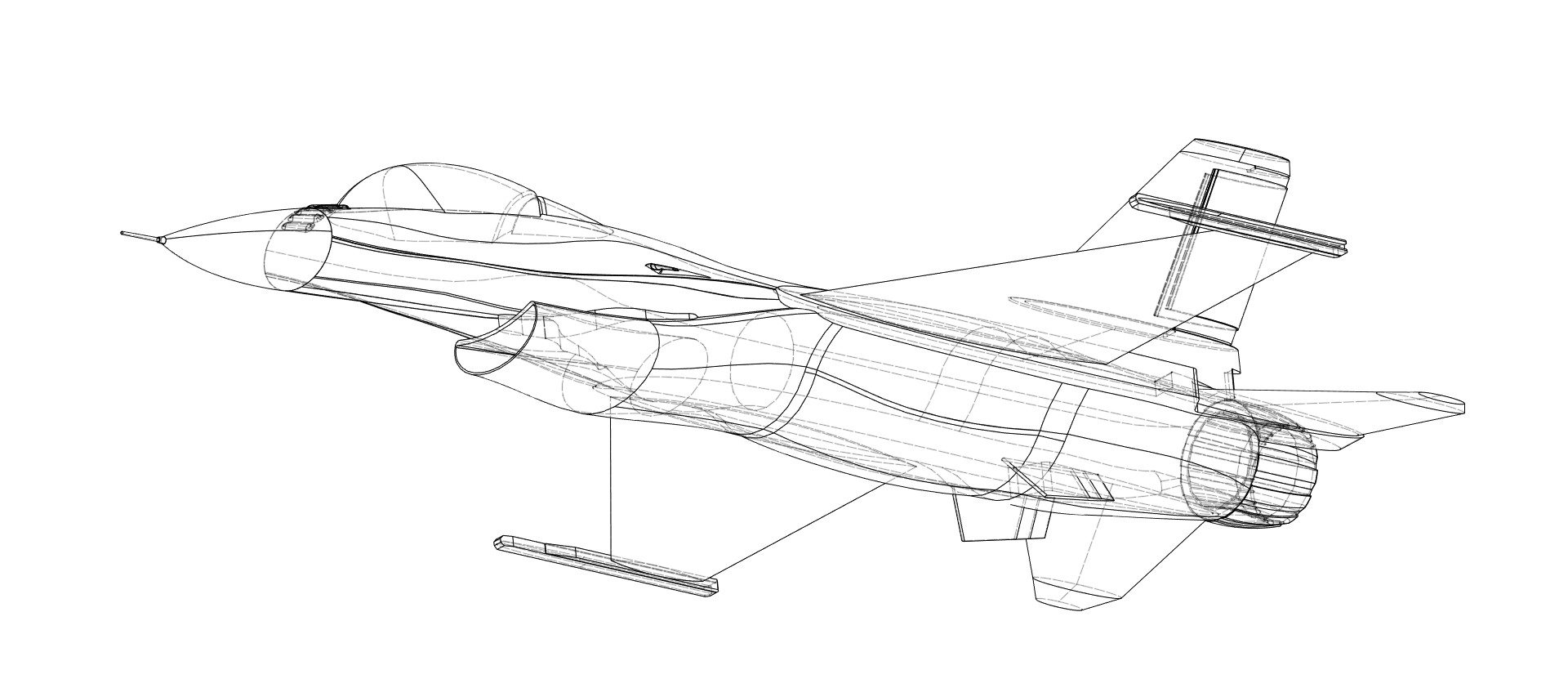
A bottom shot of the plane, also semi-wireframe. This showcases the splitter above the intake as well as some more of the geometry under the plane.
