F104 Starfighter
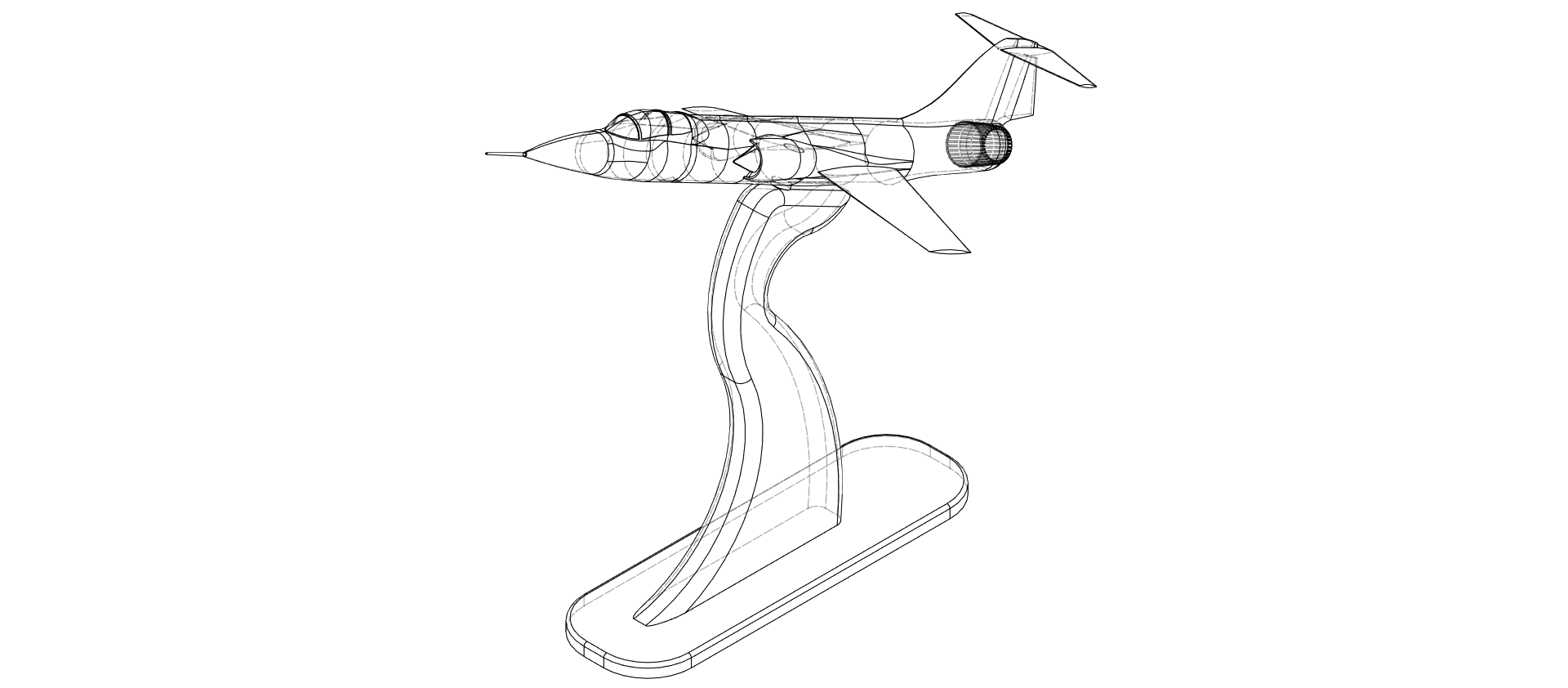
A frontal wireframe view of the plane and its base, showcasing the smooth but relatively simple geometry
For my second plane model, I immediately started designing another, learning from the mistakes of the Avro Arrow model I had made earlier. To get the best result, I decided on a smooth-form, centrally focused plane to better fit with the lofting-based sectional model that I had adopted for the Arrow model. The F104 Starfighter fit this perfectly, as all of its details are central, and it’s a very smooth plane with details focused centrally, alongside small protrusions and components that would challenge my modelling abilities without providing a bad-looking result.
To start with the model, I downloaded an orthographic model with individual cross-sections that I could use for lofting. I carefully traced each cross-section and joined them together to get the smooth design form. For this part, I didn’t add the wings, tail, engine, cockpit, or intakes- those were all added later. Moving on from the body, which was just a long, formless blob with a nosecone at this point, I added a few sections around the same time. Firstly, I cut out the engine area and added a circular pattern to give slight detail to the engine. Right after, I moved on to the intakes and the cockpit of the plane, adding details and integrating it with the main body as I went. Working off the cockpit, I added the entire tail section, including the component which connected the tail to the back of the cockpit area. Finally, to cap off the model, I lofted the wings from two cross-sections and joined them with the body. Overall, while not being a demanding model, it gave me a few slight challenges that increased my skills while reaffirming my confidence in modelling after what the Avro Arrow’s model result was.
I decided to print the model shortly after, and eventually printed it three times- tweaking the wings and tail, which went from too thin, to too thick, to perfect for 3D printing. I printed a stand and a slot for the stand alongside the model, and only needed to print that once as the connection was pretty robust, and the plane’s centre of mass was squarely in the middle line of the base, keeping it from toppling.
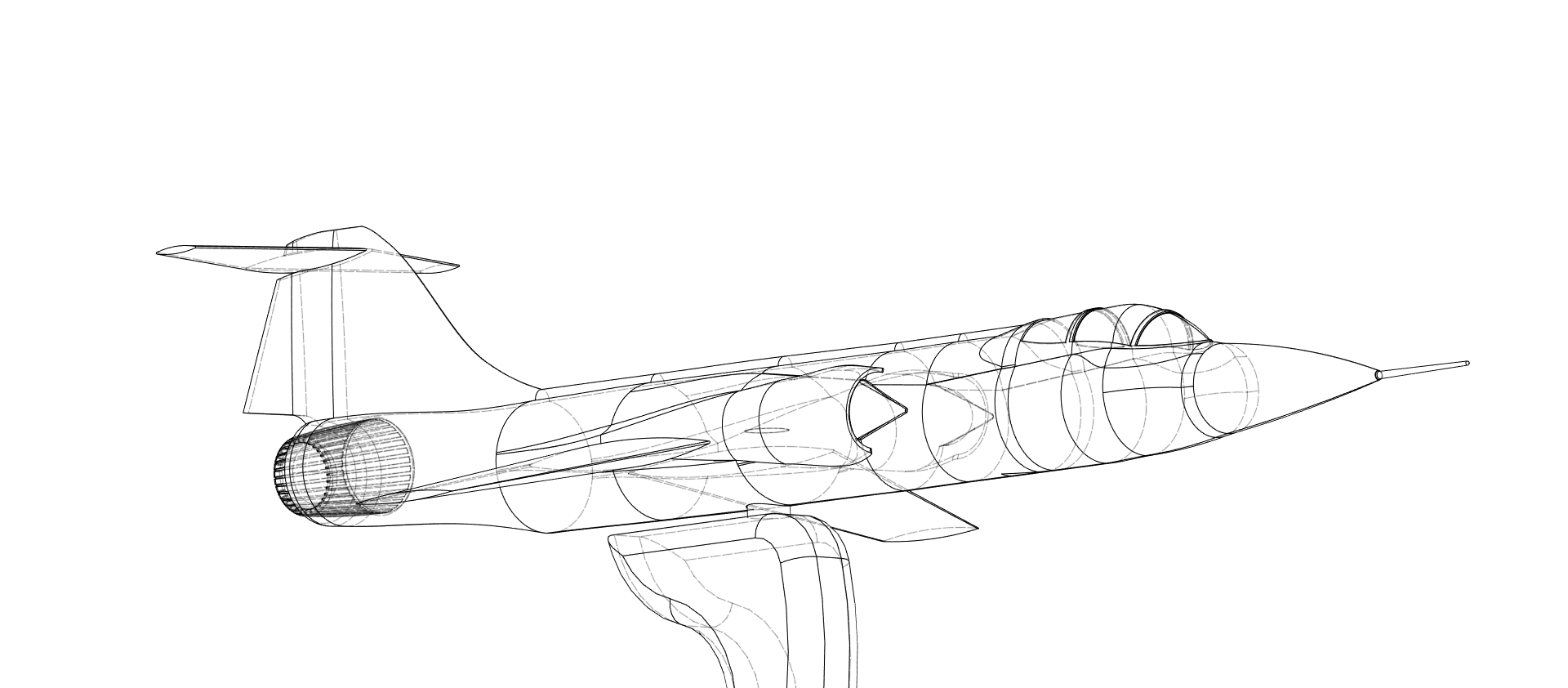
A close-up wireframe shot of just the plane model, showing a bit more detail in the tilt of the wings, the cockpit connection, and the plane’s connection to its base.
